
About Me
My name is Sean Wilson-Leslie. I hold degrees in chemical engineering and optics. My day job has nothing to do with growing plants, so this remains (for now) a side-project and hobby. I am passionate about helping the earth, reconnecting with nature, and de-commodifying access to the natural world. I believe every person should be entitled to the chance to reconnect to nature.
Planting the first seeds
I first started getting serious about plants and gardening during the summer of 2020. I first found a youtube channel called “Crime Pays but Botany Doesn’t” in which botanist Tony Santoro describes how to build a garden under an urban overpass.
Later, Tony’s youtube channel focused on native plants and educated viewers on why and how to re-wild your yard. He remains a great source of information and inspired me to start this project.
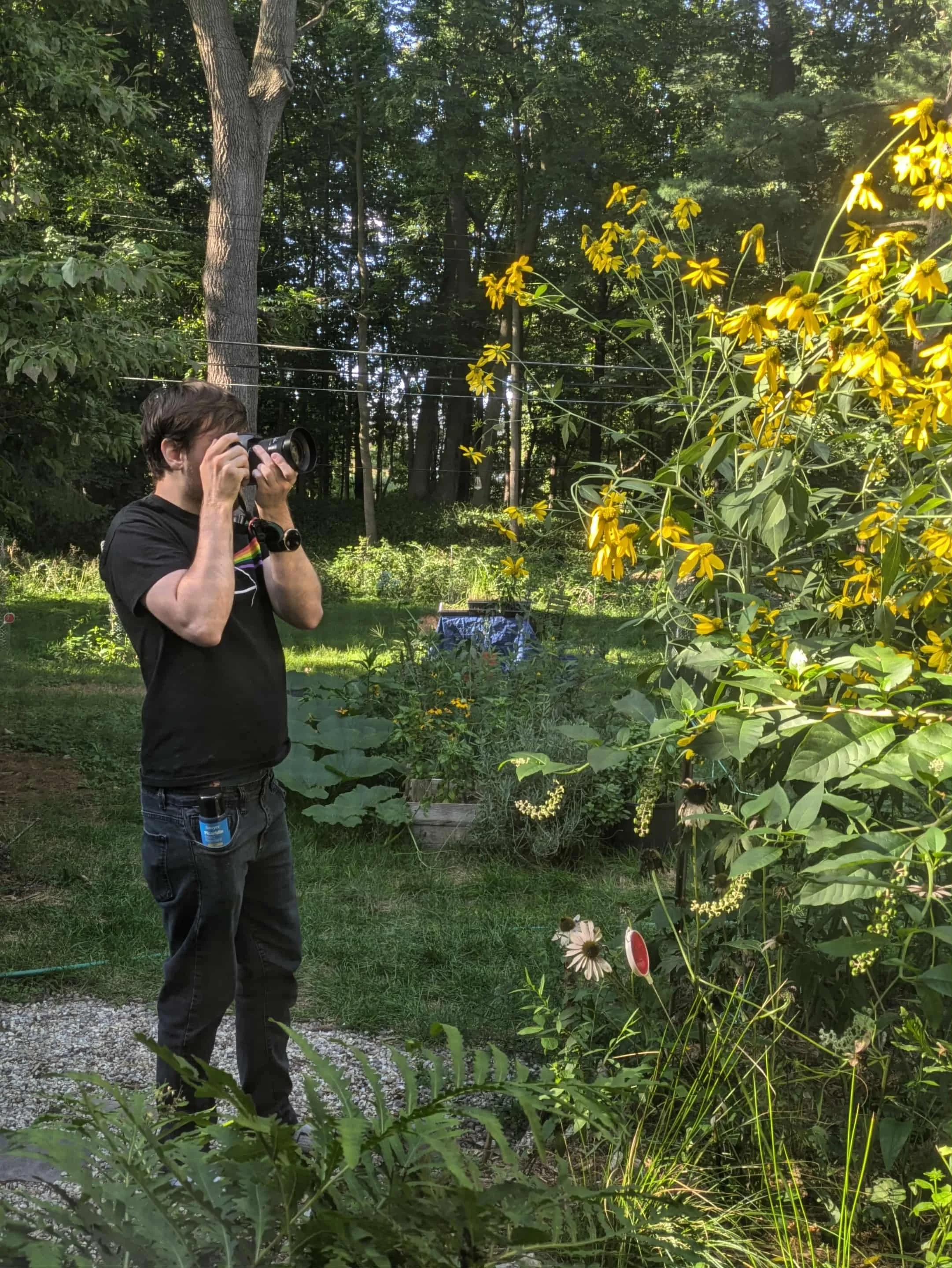
Driven by passion
What started as 100 plants on a shelf in my basement has grown into a small business because I wanted to recoup the mounting costs of growing more and more plants. 2026 will be the first year I am trying to make any money at all. The goal of this project is ultimately to improve my surroundings and form a more sustainable, beautiful world.
Starting with plants just made sense, because they constitute a low-level ecological system, and are responsible for feeding and sheltering virtually all local wildlife.
My journey through botany has been helped tremendously by the people around me. Neighbors, friends, family, scientists and fellow nursery owners have all aided me in this project.
The Process
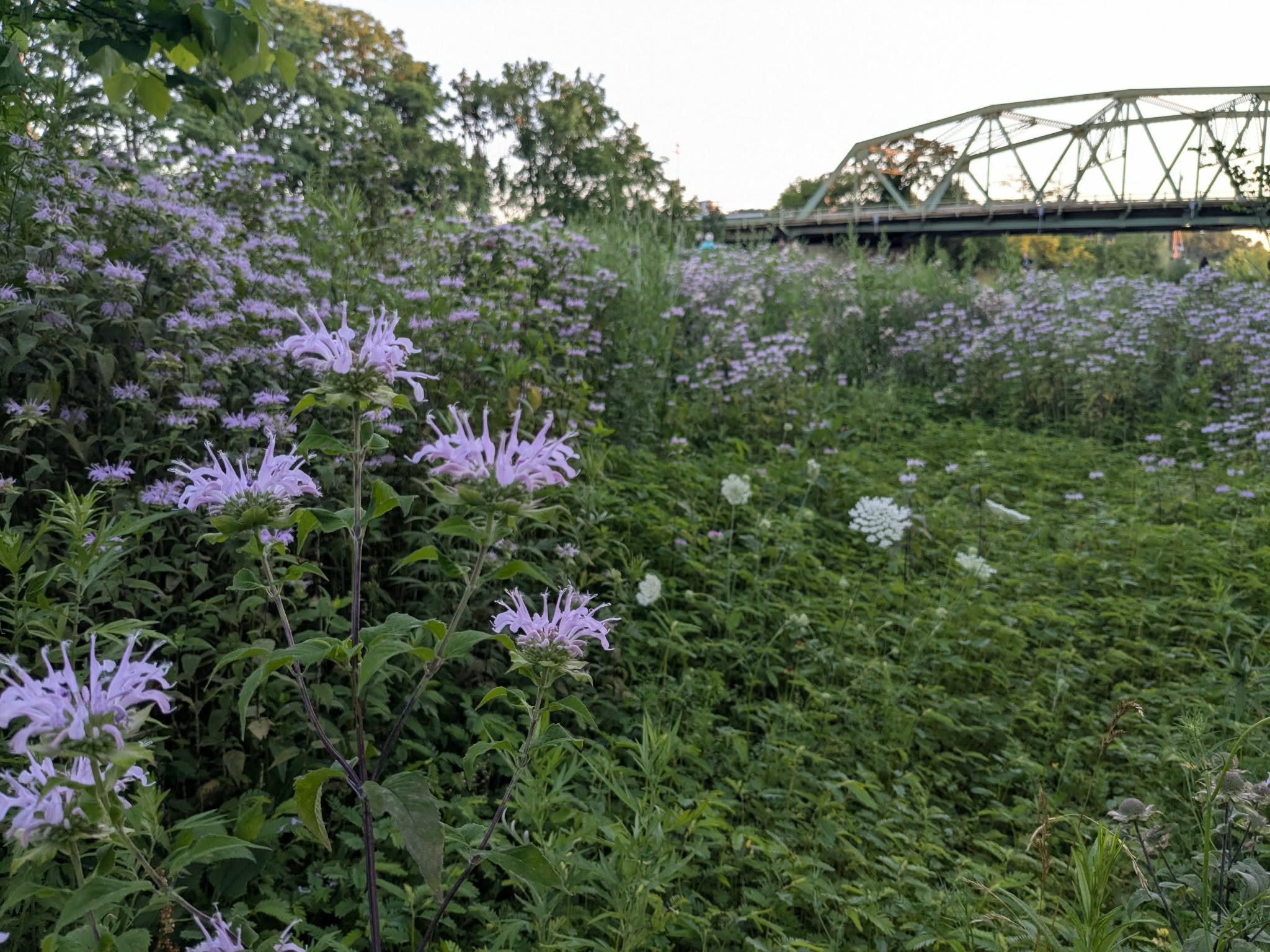
The majority of plants I sell are grown from the most local ecotypes possible, and their parents are still flourishing somewhere nearby in Monroe County. Around 1/3 of my plants are grown from seed purchased from Prairie Moon, which is an ethical harvest seed company located near the great lakes.
All hand collected seeds come from species that I have identified somewhere in New York. Using dichotomous keys and iNaturalist reviews, I physically tag, geotag, and catalog all the species of plants that I see. I then visit later in the year, remove physical tags, and collect less than 10% of the available seeds. This method leaves nature’s abundance intact to be used by wildlife, and leaves minimal trace of my visit.
I encourage good stewardship wherever you go. Don’t walk around digging up native plants, but if you see these plants in the wild, be curious. Go poke some flowers. “Touch Grass” if you will.